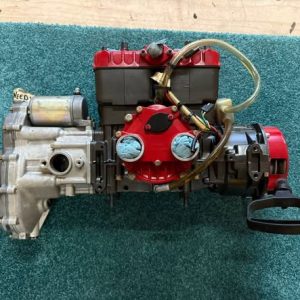
The Rotax 582 “Blue Head” RAVE Engine – Built by Rotax Rick offers aircraft builders, ultralight pilots, experimental-aircraft owners, restorers, and recreational aviation enthusiasts a recognizable two-stroke powerplant for a properly evaluated installation.
Accurate use of Rotax 582 Blue Head, Rotax 582 Blue Head RAVE Engine, and Rotax 582 Aircraft Engine keywords improves visibility without overstating current serviceability.
The Rotax 582 65HP Engine designation communicates its general power class, but actual output and operating condition depend on configuration, maintenance, tuning, and test results.
Whether buyers need a Rotax Blue Head Engine, Liquid-Cooled Aircraft Engine, Two-Cylinder Aircraft Engine, or Lightweight Aircraft Engine, the complete engine package should be evaluated.
Whether the project requires an Experimental Aircraft Engine, Ultralight Aircraft Engine, Rotax Aviation Engine, or Light Sport Aircraft Engine, airframe-specific compatibility remains essential.
Reviewing the Rotax 582 Engine Build
The seller should provide detailed photographs of the engine from every side, including the data plate, heads, cylinders, carburetors, gearbox, ignition, exhaust ports, and accessories.
The final configuration should remain connected with the exact engine serial number.
Documenting the Engine Build Process
Buyers should request invoices, build sheets, photographs, test results, correspondence, and any maintenance recommendations supplied with the engine.
Any remaining break-in requirements, operating limitations, fuel recommendations, or follow-up inspections should be disclosed.
Maintaining Power-Valve Operation
The RAVE system uses exhaust-side valve components intended to influence engine breathing across different operating conditions when correctly configured and maintained.
RAVE components should move as intended and remain free from severe contamination, damage, leakage, or unauthorized modification.
Two-Stroke Aircraft Engine Operation
Two-stroke engines should not be operated using assumptions drawn from automotive or four-stroke aircraft engines.
The buyer should determine whether the engine uses oil injection, premixed fuel, or another documented lubrication arrangement.
Aircraft Engine Temperature Management
Cooling performance depends on the radiator, coolant pump, hoses, clamps, fittings, expansion tank, thermostat where installed, coolant condition, and airflow.
Coolant hoses should remain flexible, secure, correctly routed, and protected from heat, abrasion, sharp edges, and moving components.
Maintaining the Rotax Twin-Cylinder Design
Cylinder walls, pistons, rings, bearings, seals, and crankshaft condition should be documented when the engine build allows inspection records.
The buyer should ask whether the engine has been run since assembly and whether any break-in procedure remains outstanding.
Dual Carburetor Fuel Delivery
Both carburetors should open and close together while maintaining appropriate cable security and throttle travel.
Carburetor settings should correspond with the engine configuration, intake system, exhaust, altitude, climate, and applicable technical guidance.
Aircraft Engine Ignition Testing
Ignition modules, coils, leads, spark-plug caps, plugs, grounds, switches, and connectors should be identified and inspected individually.
Excessive engine-speed drop, roughness, intermittent firing, or unusual plug condition should receive prompt investigation.
Understanding the Rotax 582 Gearbox
A gearbox should not be selected solely because it bolts to the engine.
Service records should identify oil changes, inspections, component replacement, and operating hours where applicable.
Two-Stroke Expansion Chamber Considerations
The buyer should confirm whether the engine package includes the complete exhaust system.
Previous repairs and modifications should be documented.
Managing Aircraft Weight and Balance
A Lightweight Aircraft Engine can help aircraft designers and owners manage useful load, balance, structure, and performance when the complete installation is engineered correctly.
The complete conversion should be reviewed through appropriate engineering and maintenance processes.
Rotax 582 Engine Installation Options
Aircraft-specific evaluation supports responsible Ultralight Aircraft Engine selection.
Professional planning supports a more dependable experimental-aircraft project.
Light Sport Aircraft Engine Considerations
The buyer should review aircraft limitations, maintenance requirements, operating rules, and installation data before purchase.
Responsible documentation supports long-term Light Sport Aircraft Engine value.
Documenting Time Since Build
The seller should disclose total engine time, time since the documented build, time on the crankshaft, time on the gearbox, and time on major replacement components when known.
Storage after building or removal should also be documented, including preservation and environmental conditions.
Engine Run Testing and Performance Evaluation
The test should identify the fuel, oil, propeller or load device, cooling system, instruments, duration, and operating conditions used.
Professional testing supports responsible evaluation of the Rotax 582 Aviation Engine.
Inspecting Rotax 582 Engine Health
Comprehensive mechanical evaluation supports informed purchasing.
Storage can affect seals, bearings, internal surfaces, coolant passages, and fuel-system components even when the engine has not been operated.
Rotax 582 Pre-Purchase Checklist
The buyer should obtain enough information for a qualified Rotax engine specialist or experienced aviation mechanic to evaluate the powerplant.
- Confirm the complete engine model, serial number, Blue Head and RAVE configuration, builder identity, build date, total time, time since build, crankshaft history, and available records.
- Review documentation for crankshaft replacement, bearings, seals, pistons, rings, cylinders, RAVE service, carburetor work, ignition inspection, gearbox maintenance, and run testing.
- Inspect and photograph the engine immediately after delivery before rotating, testing, disassembling, repairing, mounting, or connecting fuel and electrical systems.
Preventing Storage Damage
Open fuel, oil, coolant, intake, and exhaust connections should be protected from contamination using suitable covers.
The crankshaft and gearbox should not carry unsuitable shipping or storage loads.
Professional Experimental Aircraft Engine Installation
Professional preparation protects both the engine and aircraft.
The cooling system should be routed and secured to prevent chafing, trapped air, leaks, heat exposure, and contact with moving parts.
Required aircraft records and operating limitations should be updated appropriately.
Maintaining the Rotax 582 Blue Head Engine
Repeated adjustment should not replace diagnosis of an underlying engine or installation problem.
Operating data such as temperatures, engine speed, fuel consumption, plug condition, and ignition-check behavior can help identify developing concerns.
Buying a Specialist-Built Blue Head Engine
Engines with detailed build sheets, photographs, invoices, run videos, and transparent history are easier for serious buyers to evaluate.
The lowest purchase price may not represent website the lowest installed cost when major accessories or records are missing.
Rotax 582 Aircraft Engine Conclusion
For a properly matched aircraft installation, the engine can provide compact aviation power when professionally inspected, installed, operated, and maintained.
The strongest purchasing decision begins with confirming the exact engine model, serial number, RAVE configuration, builder documentation, internal parts, crankshaft history, operating hours, gearbox ratio, carburetors, ignition, cooling system, exhaust, test results, and included accessories.
Whether the product is described as a Liquid-Cooled Aircraft Engine, Two-Cylinder Aircraft Engine, Lightweight Aircraft Engine, or Experimental Aircraft Engine, complete system compatibility remains essential.
With complete evaluation and continued care, the Rotax 582 “Blue Head” RAVE Engine – Built by Rotax Rick can deliver a professional combination of lightweight construction, liquid-cooled design, two-stroke power, and recreational aviation versatility.